Motivation
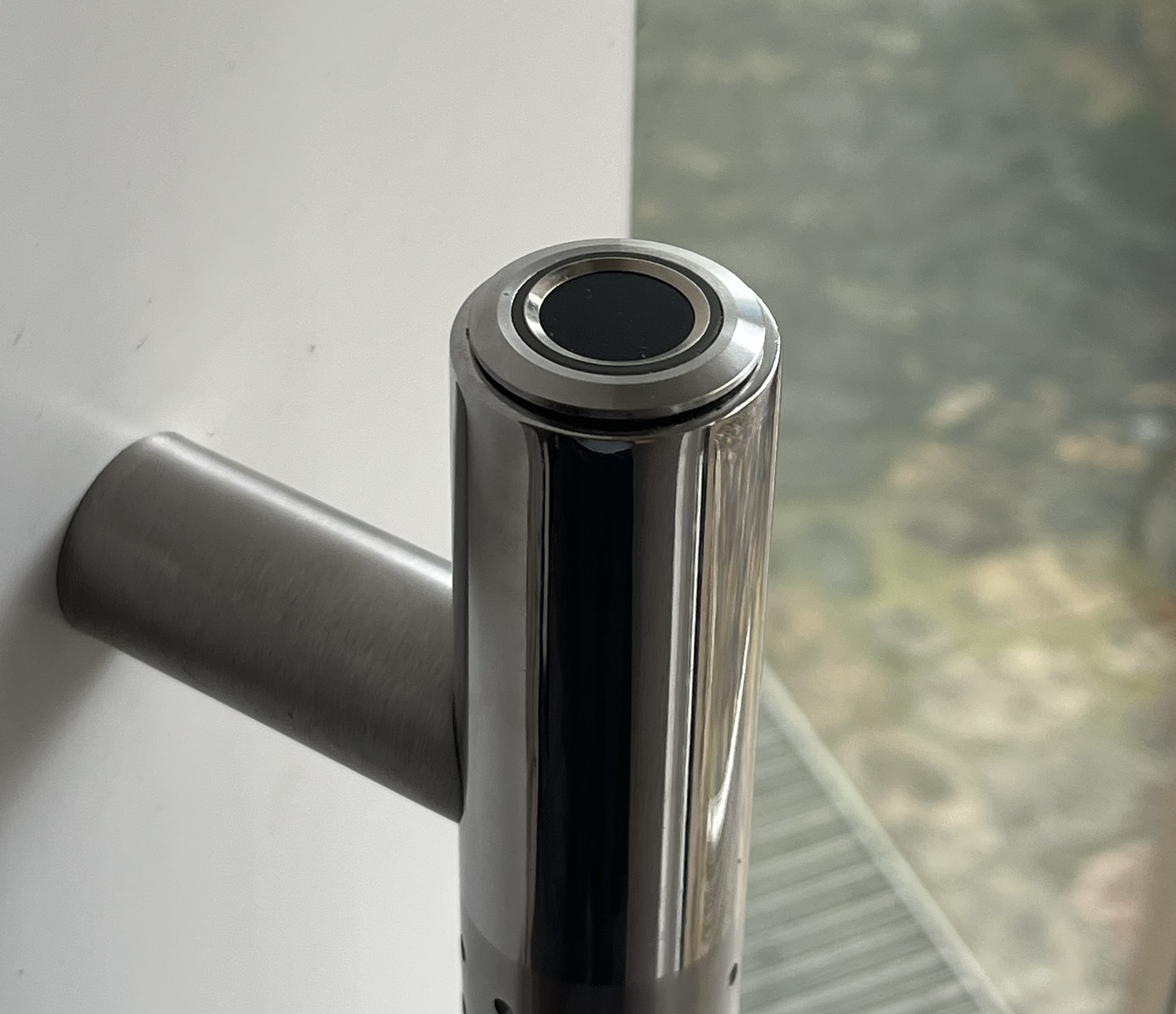
Die Haustür verfügt über keinen Aussengriff und kann daher von aussen nur mit einem Schlüssel geöffnet werden. Obwohl dies zuverlässig funktioniert, ist die Bedienung im Alltag nicht immer komfortabel, insbesondere wenn keine Hand frei ist oder häufiges Ein und Ausgehen erfolgt.
Bereits vorhanden war ein elektrischer Türöffner, der jedoch nicht angesteuert wurde. Ziel dieses Projekts war die Entwicklung eines eigenständigen Zugangssystems mit zusätzlichen Authentifizierungs- und Automatisierungsfunktionen.
- Biometrische Authentifizierung über einen im Türgriff integrierten Fingerabdrucksensor.
- Automatische Türöffnung durch BLE-basierte Präsenzerkennung bekannter Mobilgeräte.
Systemaufbau
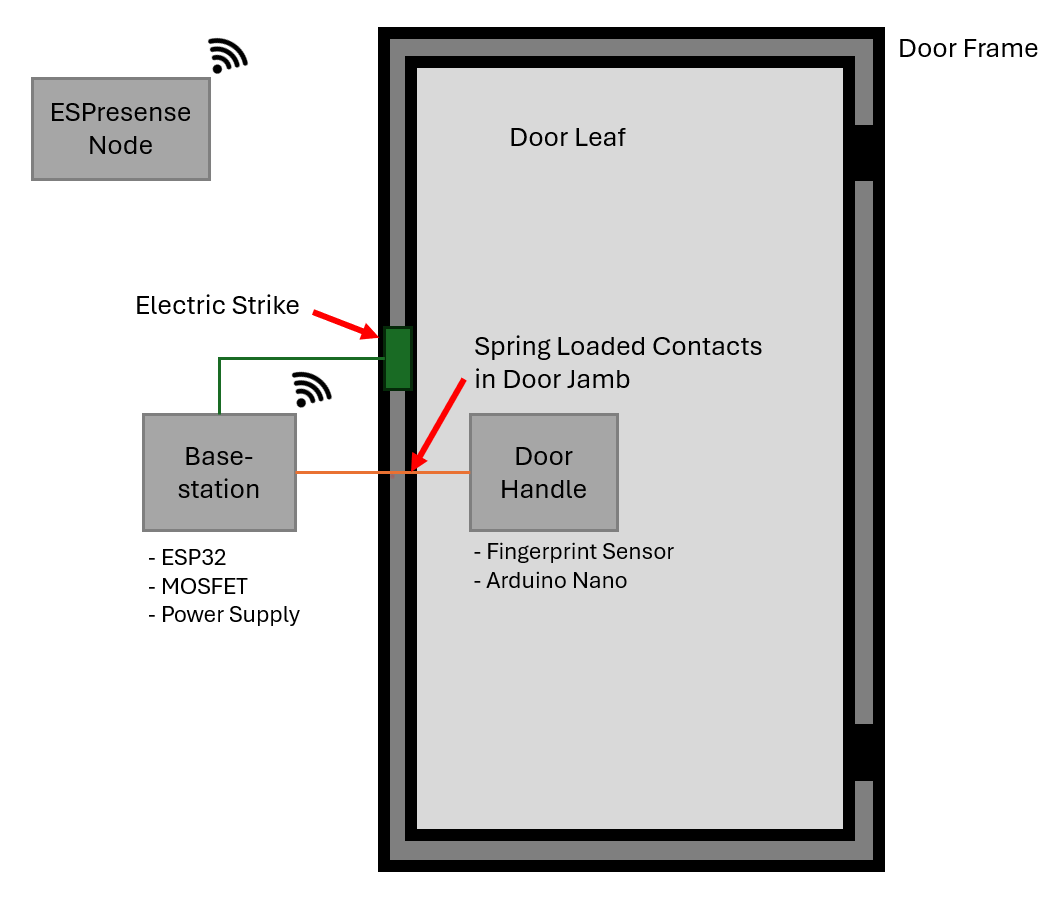
Das System besteht aus einer Türgriffeinheit und einer Basisstation.
- Türgriffeinheit: Ein R503-Fingerabdrucksensor ist im Türgriff integriert und über UART mit einem Arduino Nano verbunden. Die erfolgreiche Authentifizierung wird über einen federkontaktbasierten Türkontakt an die Basisstation übertragen.
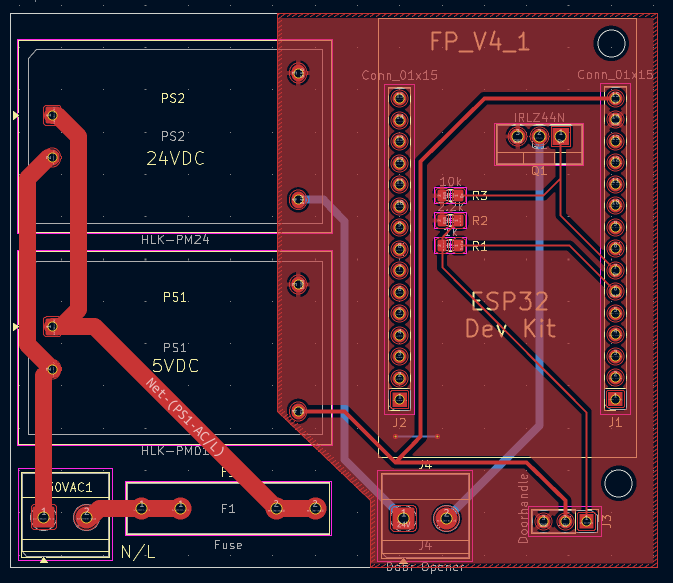
- Basisstation: Die Basisstation basiert auf einem ESP32. Sie steuert den elektrischen Türöffner über einen MOSFET und kommuniziert mittels MQTT mit Home Assistant.
- Präsenzerkennung: Ein separater ESP32 mit ESPresense-Node erkennt bekannte BLE-Geräte in Türnähe und kann den Türöffner automatisch aktivieren.
Funktion
- Fingerabdruckverarbeitung: Die biometrische Authentifizierung erfolgt lokal auf dem Arduino Nano. Nach erfolgreicher Identifikation wird ein Signal an die Basisstation übermittelt.
- Türöffner: Der elektrische Türöffner wird über einen MOSFET durch den ESP32 angesteuert.
- Präsenzerkennung: Der ESPresense-Node überwacht bekannte BLE-Geräte und ermöglicht eine automatische Türöffnung bei erkannter Anwesenheit.
- Integration & Logging: Sämtliche Zugangsereignisse werden über MQTT an Home Assistant übertragen und dort protokolliert. Zusätzlich ist eine Fernsteuerung möglich.
Die Authentifizierung per Fingerabdruck erfolgt typischerweise innerhalb von weniger als zwei Sekunden. Die BLE-basierte Präsenzerkennung ermöglicht eine Reaktionszeit von unter 0,5 Sekunden.